
Storm Damage Gutter Repair in Orlando, FL
When wind-driven rain rips through Central Florida during hurricane season, or a hard summer thunderstorm rolls off the afternoon heat, gutters are often the first part of the house to fail — torn loose from the fascia, crushed by a falling limb, or packed solid with debris in under an hour. Here's what that kind of damage typically looks like, what to do right after the storm passes, and how our response works during a busy storm week.
Call (689) 400-8133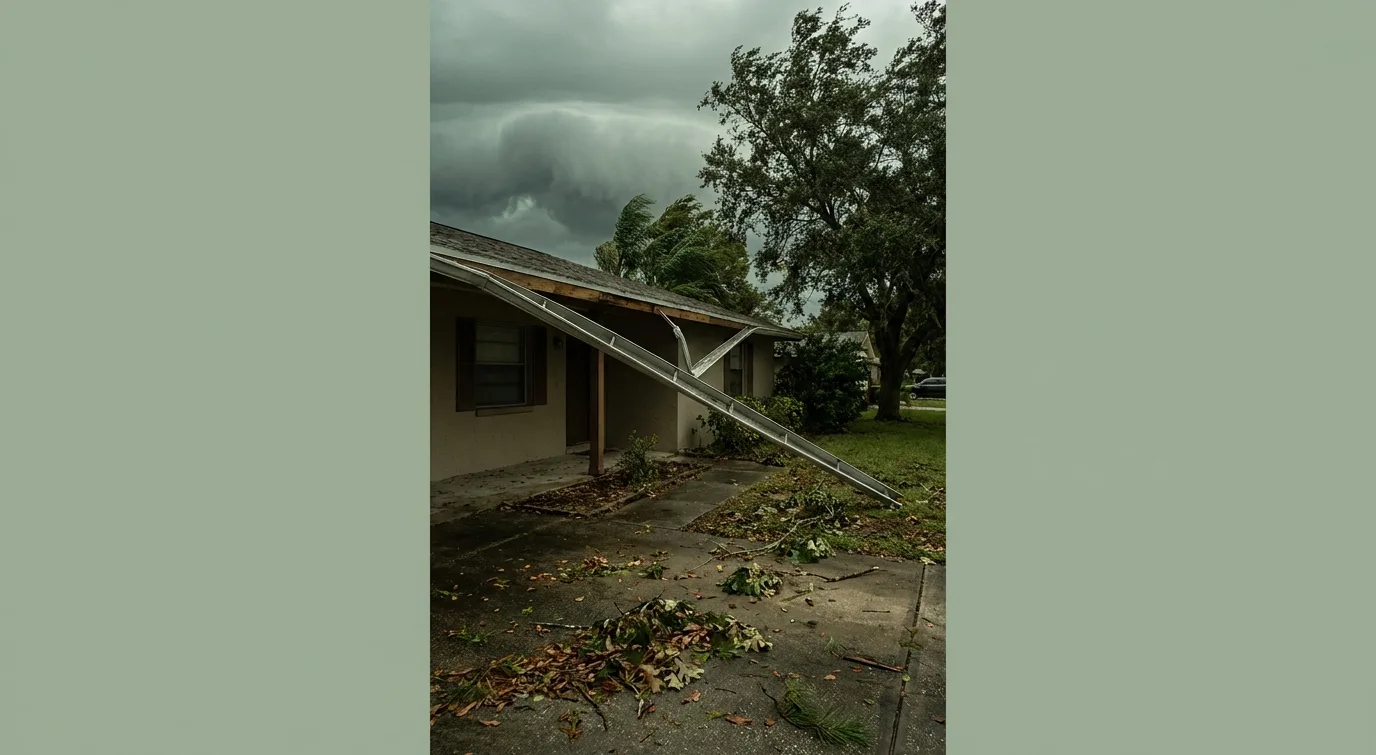
Why Central Florida Storms Are Different
Orlando's rainy season runs roughly June through November, and for most of that stretch a gutter system is dealing with near-daily afternoon downpours that come and go fast without causing any trouble. Hurricane season overlaps the same window, and that overlap is where the real damage tends to happen — wind-driven rain during a tropical system behaves nothing like a normal afternoon storm. Instead of water simply running off the roof, gusts drive rain sideways under the drip edge, load the troughs with branches and leaves torn loose from the live oak and pine canopy overhead, and put lateral stress on fasteners that were only ever designed to hold weight, not resist a sideways pull.
A normal Central Florida downpour is loud but predictable — water sheets off the roof and the gutters carry it away without much drama. A storm with real wind behind it is different. Gusts can rip a fastened section clean away from the fascia board, twist a downspout loose at the elbow, or drive rain sideways under the roofline hard enough to overload a system that was already carrying a summer's worth of oak leaves and pine needles. Hurricane-season systems are the worst of it, because the wind and the volume of water arrive together, and a gutter that would easily handle either one on its own can fail under both at once.
What Storm Damage to Gutters Actually Looks Like
After a storm with real wind behind it, walk the perimeter of the house from the ground and look for:
- Torn or sagging sections — a run pulled away from the fascia at one end, hanging at an angle or resting against the siding or the ground.
- Debris-packed troughs — leaves, twigs, and shingle grit driven in by wind-blown rain, backing water up over the front edge and down the side of the house.
- Crushed or dented downspouts — usually from a falling branch, sometimes bent enough to block drainage completely even after the storm has cleared.
- Pulled fasteners and hangers — screws or spikes worked loose by the flexing and vibration of sustained wind, even where the gutter itself still looks fine.
- Torn-off guards — lightweight covers that lifted at a seam and either dented the gutter below on the way down or blew off the property entirely.
None of this means every storm leaves damage behind. Most summer afternoon downpours come and go without touching a well-fastened system at all. What tends to cause trouble is the combination of sustained wind, a heavy debris load already sitting in the trough from the surrounding tree canopy, and an older system where fasteners have already loosened a little over the years — a combination that shows up more under the dense oak canopy common in neighborhoods like Winter Park, but can happen anywhere in the metro during a strong enough event.
What To Do in the First Few Hours
Storm damage to a gutter system is rarely an emergency in the sense of immediate danger to the house, but a torn or leaning section left in place can keep doing damage — pulling more fasteners loose, gouging the fascia board, or dumping water straight down a wall instead of away from the foundation. A few things matter more than speed in the first few hours after the storm passes.
- Stay off the ladder — wet, wind-loosened footing and a still-gusty sky are a bad combination, and a walk-around from the ground tells you most of what you need to know before anyone climbs anything.
- Photograph the damage — wide shots of the whole roofline and close-ups of torn sections, dents, and any debris pile-up, taken before anything is moved, propped back up, or repaired.
- Skip the DIY temporary fix — a section re-hung with the wrong fastener, or propped back into place without checking the fascia board behind it, can fail again in the next round of wind and take a chunk of trim with it.
- Call rather than wait it out — a quick phone assessment tells you whether it's a same-day issue or something that can reasonably hold until a scheduled visit.
Every gutter we hang at Orlando Gutter Crew starts with a level chalk line, and that same care goes into re-hanging a section that a storm tore loose — it gets checked and re-fastened properly, not just pushed back up and hoped for.
That distinction matters more than it sounds like it should, since a rushed re-hang after a storm is one of the more common reasons the same section fails again in the very next round of weather.
How Priority Scheduling Works After a Storm
When a named storm or a serious wind event moves through Central Florida, calls tend to come in waves — Winter Park one morning, Apopka and Ocoee the next as the damage becomes visible in daylight once neighbors start comparing notes and walking their own properties. We sort by severity rather than by who called first: a gutter that's actively dumping water against a wall, or one that's visibly pulling away from the fascia and at risk of coming down further, moves ahead of a dented section that's still draining fine and just needs attention eventually. If your damage is cosmetic and stable, we'll tell you that plainly on the phone and give you a realistic window, rather than a vague promise that keeps shifting as the schedule fills up. In a widespread event affecting the whole metro at once, that honesty about timing matters more than a generic reassurance would.
A Note on Insurance Documentation
Wind and storm damage to gutters is sometimes covered under a homeowner's policy, sometimes bundled in with roof damage, and sometimes excluded depending on the carrier and the specifics of the storm event. We're not in a position to promise what your policy will or won't pay for — that's a conversation between you and your insurer, and policies vary enough that we'd rather be honest about that upfront than guess wrong. What we can do is give you a clear written estimate and, where it's useful, photos and notes on exactly what failed and why, so you have something concrete and specific to bring to an adjuster if you decide to file a claim. Checking your policy documents or calling your agent before or alongside our visit is worth doing if the damage is significant.
After the Repair
Once storm damage is fixed, it's worth having the rest of the system looked at. A section that failed on one side of the house sometimes means the fasteners elsewhere took the same beating during the same storm and are one more wind event away from the same outcome, even if they haven't let go yet. A short follow-up inspection after the repair is a cheap way to find that out before the next storm rather than after it.
Frequently asked questions
What should I do right after I notice storm damage to my gutters?
Stay off the ladder until the wind and rain have fully passed, take photos of the damage from the ground, and call us for a quick phone assessment. Avoid re-hanging or bending anything back into place yourself — a rushed fix can hide a bigger problem or fail again in the next storm.
Will you work with my insurance adjuster?
We'll provide a written estimate and photo documentation of the damage that you can submit with a claim, and we're glad to answer an adjuster's questions about the scope of the repair. We can't guarantee what your policy will or won't cover — that's a conversation with your insurance carrier.
How fast can you respond after a major storm?
It depends on how widespread the damage is across Central Florida that week. Active leaks or sections actively pulling away from the house get priority, and we'll give you an honest timeframe on the phone rather than an open-ended promise.
Is a leaning or torn gutter section dangerous to leave up?
It's usually not an immediate safety hazard, but a section that's already pulled away can keep working itself loose, take fascia board with it, or drop without warning in the next round of wind. It's worth having it looked at rather than waiting out the season.
Do you offer temporary fixes until a full repair can be scheduled?
In some cases, yes — securing a loose section or clearing a packed trough so water isn't dumping against the house is often enough to hold until we're back for the permanent repair. We'll tell you honestly whether a temporary fix makes sense for your situation.