
Gutter Guards in Orlando, FL
Screen guards and foam inserts work fine against broad oak leaves, but pine needles are a different problem — they're thin enough to slide through gaps that would stop almost anything else, and a lot of guard products on the market simply weren't engineered with that in mind.
Call (689) 400-8133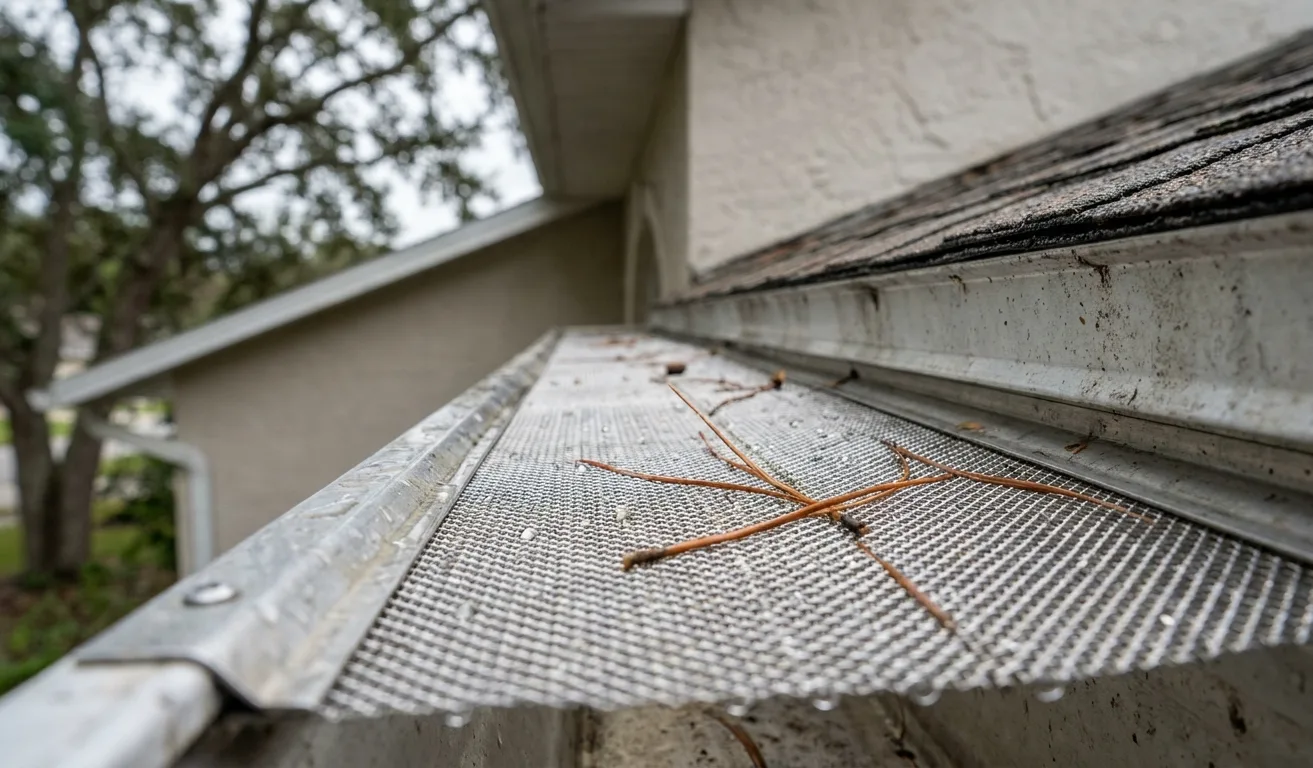
Why Pine Needles Beat So Many Gutter Guards
A pine needle is narrow, stiff, and pointed at one end, which makes it good at doing exactly what a broad leaf can't: threading itself through a gap edge-first and lodging there instead of sliding off. Slash and longleaf pine both drop needles nearly year-round rather than in one seasonal flush, so a guard that lets even a few through each week ends up with a packed layer after a season or two, the same way lint packs a dryer vent. That layer sits on top of the guard rather than inside the gutter, which sounds like a small win, but a thick enough mat still blocks water from reaching the openings underneath it.
This is why mesh size and build quality matter more here than in a lot of the country. A screen with openings sized for keeping out oak leaves will happily pass pine needles all day. A true micro-mesh, with small and consistent openings, is built for exactly this problem — but only if the mesh itself is stainless steel or a comparable rigid material that holds its shape under sun and rain. Cheaper aluminum or plastic mesh flexes and sags over time, and once it deforms even slightly, needles find the opening.
Comparing Guard Types Honestly
Not every guard on the market is built for the same debris, and it's worth knowing where each one tends to fall short before you pay to have it installed.
Foam inserts
Cheap and easy to install, but pine needles work their way into the foam's own pores over a season or two, and once that happens the foam has to be pulled and replaced rather than cleaned.
Screen and standard mesh
Holds up fine against oak leaves and larger debris, but the needle-sized gaps in most standard screen let pine needles straight through — this is the type most likely to disappoint a heavily pined property.
Micro-mesh
The tightest opening size of the common guard types, and the one that actually stops pine needles in most cases, provided the mesh itself is a rigid metal rather than a flexible plastic weave.
Surface-tension / reverse-curve
Sheds large debris well by routing water around a curved nose while leaves fall off the front, but fine needles and grit can still ride the water film into the channel behind the curve during a hard, wind-driven storm.
None of these is a universal answer — the right pick depends on what's actually growing over your roofline, and we'll walk a property before recommending one over another rather than defaulting to whatever's easiest to install.
What Guards Do and Don't Eliminate
It's worth being straightforward about this, because a lot of guard marketing implies a gutter never needs attention again once guards go on. That's not how any of them actually work, including the good ones. Every property with gutters at Orlando Gutter Crew still gets an occasional check even after guards go on, since a covered gutter can develop problems that are not visible from the ground.
- Guards reduce how often debris gets inside the trough — they don't seal the system shut, and a determined pine needle or a wind-driven leaf can still find its way in during a bad storm.
- Guards don't stop dirt and pollen film — the fine grit and spring pollen load that cakes onto every exterior surface here settles on top of the mesh just as it would on an open gutter, and it can eventually clog the tiny openings themselves.
- Guards don't inspect themselves — hangers, seams, and fascia keep aging under the mesh the same as they would without it, and a covered gutter can hide a slow leak longer than an open one would.
Adding Guards to a Gutter System You Already Have
Most guard installs in this market aren't paired with new gutters — they're added onto a system that's already up, sometimes one that's been in place for years. That's a normal and straightforward job as long as the existing gutter is in decent shape to start with. We check hanger spacing and pitch before fastening anything on top, because guards installed over gutters that are already sagging or pitched wrong just lock the existing problem in place under a layer that makes it harder to see.
If a gutter system is old enough or damaged enough that it needs work regardless, it's usually smarter to handle the repair or replacement first and add guards to a system that's actually sound, rather than paying to guard something that needs to come down soon anyway.
Guards Reduce Cleaning, They Don't End It
The honest way to frame guards is as a way to stretch the interval between cleanings and cut down on how often anyone needs to be on a ladder, not as a way to skip cleaning altogether. A property that needed cleaning twice a year without guards might reasonably drop to once a year with a good micro-mesh system installed — that's a real reduction in cost and hassle over a few years, even though it's not zero.
If you're deciding between guards and just staying on top of a regular cleaning schedule, either path is reasonable depending on how much canopy sits over the roof — we'll give you a straight answer on which one saves more over time once we've seen the property.
Frequently asked questions
Do gutter guards really stop pine needles?
The right ones do. A true micro-mesh guard with small, consistent openings in a rigid material like stainless steel stops the vast majority of pine needles. Standard screen guards and foam inserts, the cheaper options at most hardware stores, generally don't — needles either slide through the gaps or work their way into the foam itself over time.
Can guards be added to gutters you didn't install?
Yes, this is the most common install we do. We check the existing gutter's pitch and hanger spacing first, and as long as the system itself is sound, guards go on without any need to replace the gutters underneath them.
Do gutter guards void a roof warranty?
Guards attach to the gutter, not the roof or the drip edge shingles themselves, so a properly installed guard shouldn't affect a roofing manufacturer's warranty. That said, we'd recommend checking your specific roof warranty language if you're unsure, since terms vary by manufacturer and installer.
How much maintenance do guarded gutters still need?
Less than an open system, but not none. Most guarded gutters still benefit from a check once a year to clear any pollen film or grit that's settled on the mesh and to confirm nothing has worked its way underneath during a bad storm — it's a shorter visit than a full cleaning, but it's still worth doing.