
Gutter Inspection in Orlando, FL
A gutter inspection is the checkup Orlando Gutter Crew books before a storm finds the weak point for you, not the call you make after it already has. We put hands and a flashlight on every seam, hanger, and downspout while the system is still working, so small problems stay small.
Call (689) 400-8133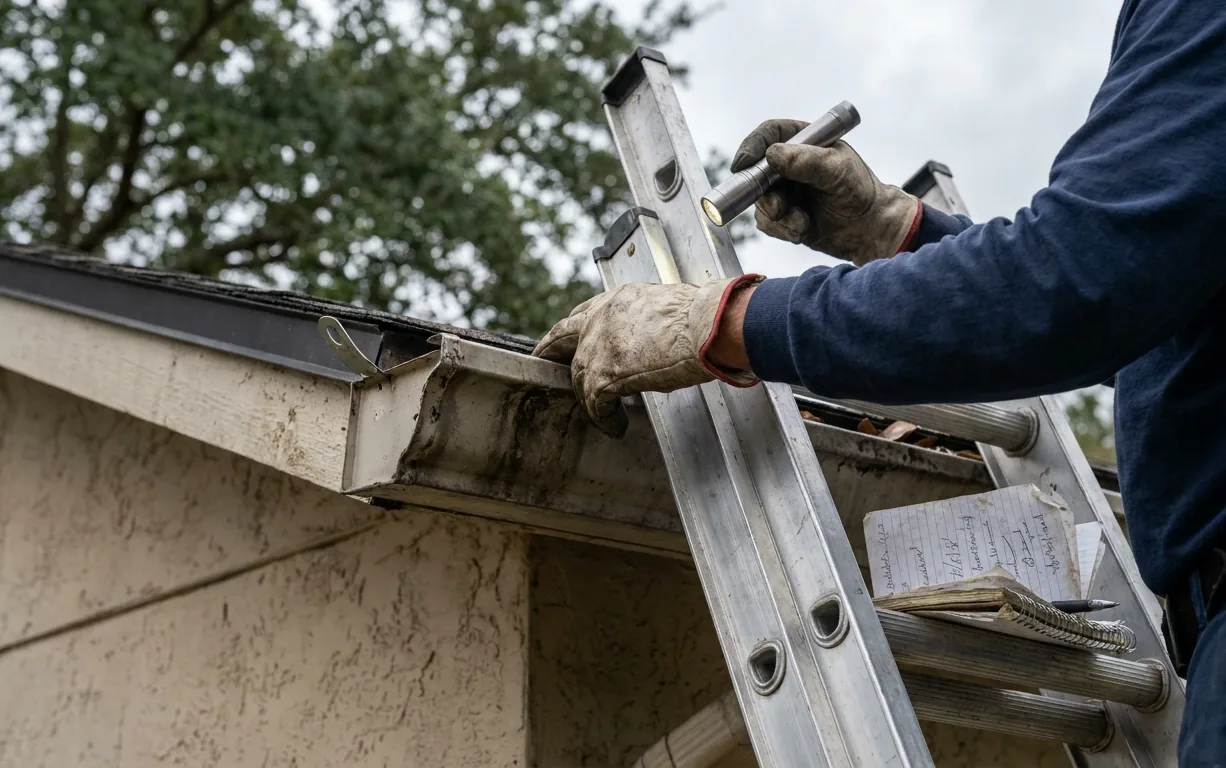
What We Actually Check
An inspection is not a walk around the yard looking up — we get on a ladder and put hands and a flashlight on every run.
- Slope and pitch — every section should fall consistently toward its downspout; a flat or reverse-pitched stretch is where standing water and overflow start
- Hangers and fasteners — checking for loose, rusted, or missing hangers that let a gutter sag or pull away under the weight of a full afternoon storm
- Seams and end caps — the joints are where leaks start first, especially on older sectional gutter systems with more seams than a seamless run
- Downspout function — confirming water actually exits at the bottom and is not backing up somewhere in a bent or clogged section
- Fascia condition — looking behind the gutter for soft wood, peeling paint, or gaps that point to moisture that has already gotten past the gutter
- Staining and past overflow marks — streaking on siding or fascia tells us where the system has already failed at least once, even if it looks fine today
Who Should Book an Inspection, and When
The best time to have your gutters looked at is before hurricane season builds through the summer, not during it. We get calls in early June from homeowners who want a system checked before the daily thunderstorm pattern sets in for good, and that timing gives us room to fix anything we find before it is tested by a real storm.
New homeowners are the other group we see most often. A gutter system that looked fine at a walkthrough can be hiding loose hangers or a slow leak that a seller never mentioned, and an inspection right after closing gives you a clear baseline instead of a surprise a year in.
- Before hurricane season — ideally by late spring, while there is still time to act on anything we find
- After buying a home — before the first major storm tests a system you have never seen perform
- After a warning sign — staining, a sagging section, water at the foundation, or a gutter that overflowed during the last storm you noticed
- Every year or two as routine maintenance — for a system with no known issues, just to catch anything developing early
What You Get: A Straight Answer, Not a Guess
After we are done on the ladder, you get a plain-language rundown of what we found — not a vague "looks okay" and not a scare tactic. We tell you specifically which sections are fine, which have a developing issue worth watching, and which need attention now, and we back that up with photos of anything we are flagging so you are not taking our word for it sight unseen.
If everything checks out, we will tell you that too. Not every inspection turns into a repair quote — plenty of systems, especially ones installed correctly to begin with, come back clean.
The report itself is nothing fancy — a plain rundown, section by section, of what we found and what it means, written so a homeowner who has never been on a roof can still follow it. If something needs attention, we note roughly how urgent it is: a hanger that's starting to work loose can usually wait for a scheduled repair, while a seam that's already weeping in a light rain gets flagged as something to move on sooner rather than later.
From Inspection to Repair: This Is the Proactive Half of the Job
This page is about catching a problem while the gutter is still doing its job, before a storm turns a loose hanger or a bad seam into a section on the ground. If your gutters have already failed — torn loose in a storm, collapsed under debris weight, or overflowing badly enough that you already know something is wrong — that is a different situation, and our storm damage gutter repair service covers that reactive side of the work directly.
When an inspection does turn up something, the fix depends on what we find. A loose hanger or a failing seam is usually a straightforward gutter repair. A system that is undersized, badly pitched from the original install, or shows the same failure in more than one place is often a better candidate for full gutter replacement rather than repeated patching. We will walk you through which category your findings fall into, and why, before any work starts.
That is the whole idea behind booking an inspection before the next system rolls through — fixing a small problem in May beats replacing a whole run in September.
Frequently asked questions
How often should gutters actually be inspected?
Once a year is a reasonable baseline for most Orlando homes, timed for late spring before hurricane season builds. Homes under heavy oak or pine canopy, or gutters more than eight or ten years old, often do better on a shorter interval since debris and wear both add up faster.
Is a gutter inspection free, or does it cost something?
It depends on the scope of what you are asking us to look at — give us a call and we will give you a clear answer for your specific property before we schedule anything, rather than quoting a number that does not match your situation.
Will you inspect gutters that another company installed?
Yes. Most of the inspections we do are on systems we did not put up ourselves, including new-homeowner requests where we have no history with the house at all. We evaluate what is actually on the roofline, not who installed it.
What happens after the inspection is done?
You get a clear rundown of what we found, section by section, with photos of anything we are flagging. If repairs are needed we will quote them on the spot; if the system checks out, we will tell you that and you are done until your next scheduled look.